
Speed & Agility
Agility drills for kids that carry over to real games.
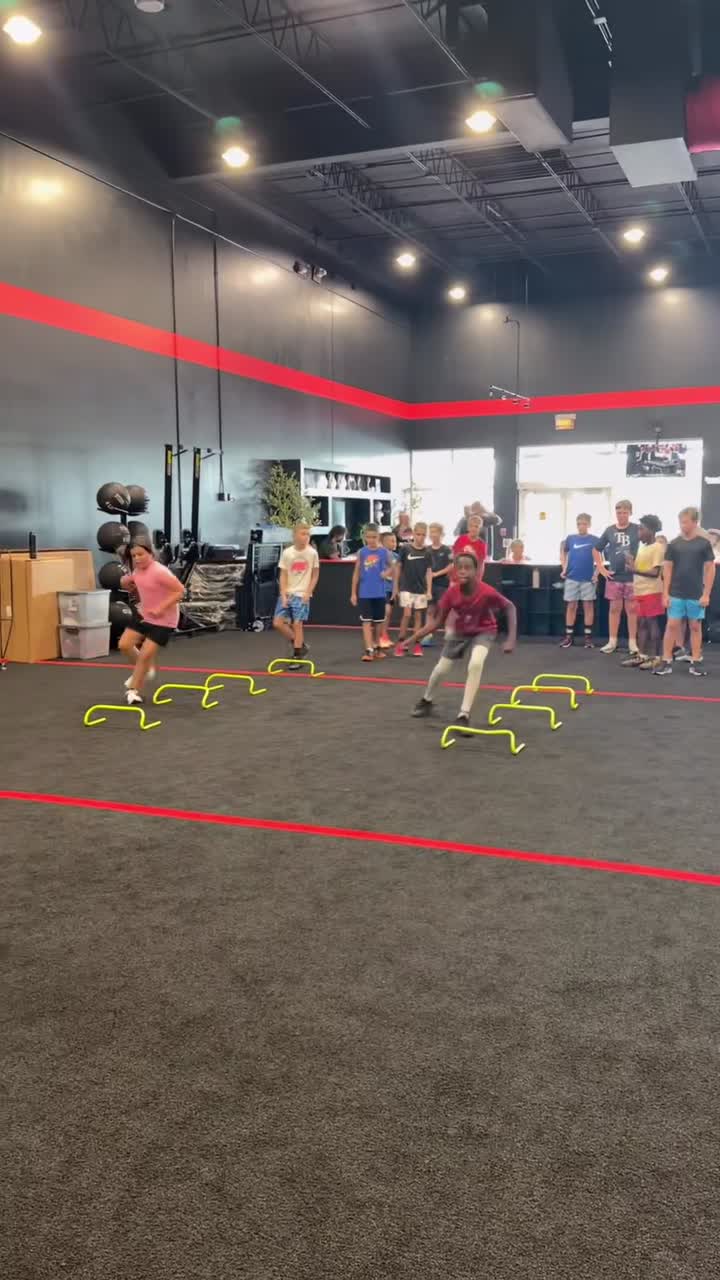
Everybody has seen the setup: a row of cones, a ladder on the ground, kids running through the pattern as fast as they can. It looks like agility training. Sometimes it is. A lot of the time it is just kids getting very good at running through cones, which is a skill that has never once shown up in a game.
Real agility is different. In a game, a kid does not know where he is going next. He reads a defender, a ball, a teammate, and then he moves. If the drill never asks him to read anything, it is not training agility. It is training a routine.
Agility is reacting, not memorizing
The drills that carry over share one thing: the athlete has to make a decision. A coach points, a ball bounces, a partner moves, and the kid reacts. That half second of reading and responding is the exact thing that happens on a field or a court, dozens of times a game.
That does not mean cones and hurdles are useless. They teach the footwork underneath the reaction: how to plant, how to drop the hips, how to move sideways without crossing the feet. The mistake is stopping there. Footwork first, then footwork with a decision on top of it. That order matters.
The work we lean on
Most of our agility work at Redline falls into a few buckets. Deceleration first, because a kid who cannot stop cannot change direction, and stopping well is also how ankles and knees stay healthy. Then lateral movement: shuffles, crossovers, and hip turns, the sideways speed that shows up in every sport. Then cutting: planting outside the body and going, taught at the right angles and the right speeds for the kid's age.
And then games. Small races, mirror drills, tag variations, reaction starts. Kids compete, they laugh, and without realizing it they are practicing exactly the read and react skill their sport demands. The best agility session for a ten year old often looks like the best part of recess, with a coach quietly shaping what is being learned.
This is lateral work in one of our sessions:
How to tell if a drill is working
Here is a simple test parents can use. Watch your child in a game a month after starting agility work. Is he stopping under control instead of sliding past plays? Is she changing direction without that wide, slow loop? Are the first two steps quicker when the ball changes hands? If yes, the work is transferring. If the only place he looks quicker is inside the drill itself, the drill is the problem.
This is also why agility work belongs in its own sessions instead of being squeezed into team practice. We laid out how SAQ differs from regular practice, and the short version is that practice time belongs to the sport, while this work builds the movement underneath it.
Agility is built, not tested
None of this replaces straight speed, either. A kid needs both, and they feed each other. Our approach to what actually makes a child faster covers the speed side of it. In the Redline SAQ program, the two are trained together, in small groups, with coaches who correct the details: the plant foot, the hip level, the first step out of the cut. Small details, big difference on game day.
Free Trial
Watch your kid change direction.
Book a free trial session at Redline and see the difference between running drills and learning to move. Your child trains, we coach, you watch it click.