
Speed & Agility
SAQ vs regular practice: what is the difference?
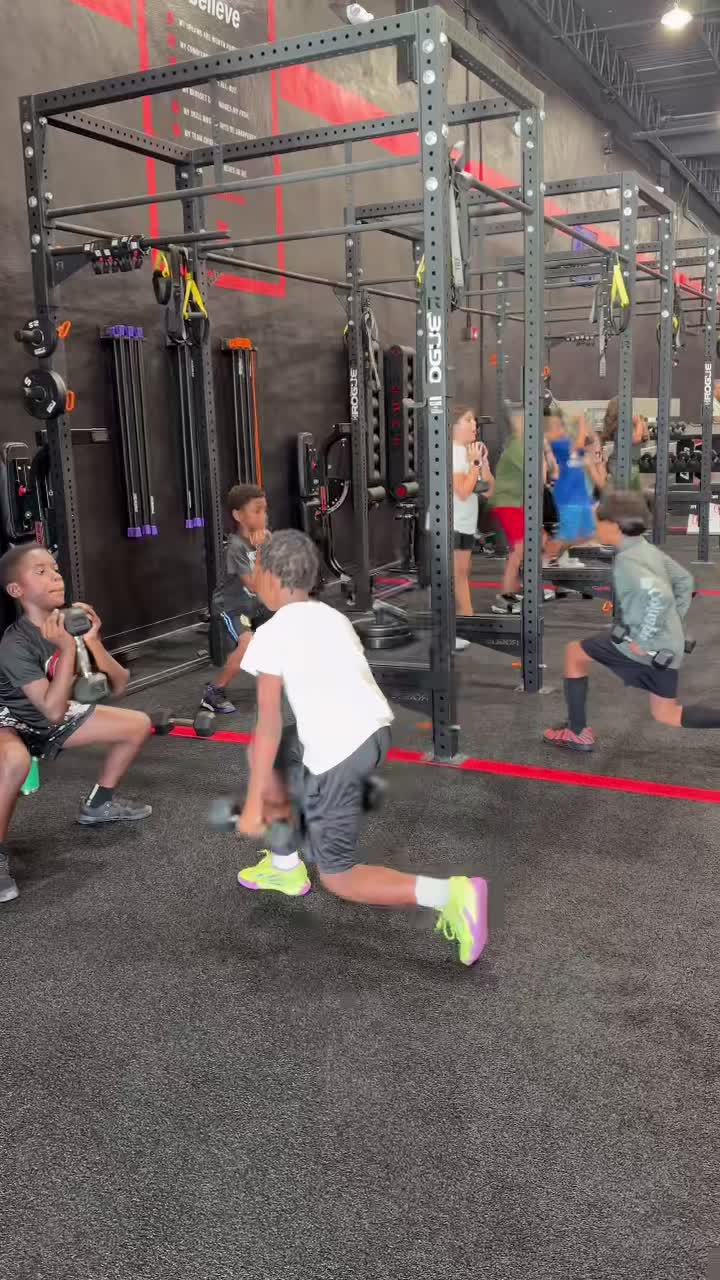
Parents ask this a lot, usually while looking at a calendar that is already full: my kid already practices twice a week, so what would SAQ add? It is a fair question, and it starts with understanding that practice and SAQ are doing two completely different jobs.
Practice teaches the sport. SAQ builds the athlete who plays it.
What happens at regular practice
Team practice is about the game itself: skills with the ball, plays, positioning, teamwork, preparing for the next opponent. A good coach has a gym or a field full of kids, a game coming up, and a limited amount of time. Every minute has to serve the team.
What practice almost never has time for is how each individual kid moves. Nobody is stopping a scrimmage to fix one player's landing mechanics or rebuild another player's first step. It is not the coach's failure. It is just not what practice is for, and with fifteen or twenty kids to run, it cannot be.
What SAQ actually is
SAQ stands for speed, agility, and quickness, and the sessions are built entirely around movement. Sprint mechanics. Acceleration and first steps. Changing direction under control. Lateral speed. Plus the strength work that makes all of it possible and keeps joints protected: bodyweight strength, single leg work, jumping and landing taught the right way.
The groups are small, the coaching is individual, and the whole point is the stuff practice cannot get to. When something is off, a coach sees it and fixes it that day, then checks it again next week. That is the difference between a kid being in the room for a workout and a kid actually being developed.
A session moves through stations like this:
They are not competing, they complete each other
Here is the easiest way to see it. Practice is where a player learns what to do. SAQ is where he builds the speed and strength to actually do it at game speed. A point guard can know exactly where to be and still get beat if his first step is slow. A soccer player can read the game beautifully and still arrive second. The sport knowledge lives in practice. The physical tools live here.
This is why the agility drills that carry over to games are trained in SAQ sessions and not left to chance in team workouts: transfer takes focused reps and a coach watching nothing else.
How families fit both in
For most families it is one or two SAQ sessions a week alongside the normal practice schedule. The sessions are short, the work is specific, and because it is not conditioning punishment, kids do not come home wrecked for the next day's practice. If anything, they move better in it.
And if your child is not on a team right now, SAQ still stands on its own. Kids do not need a roster spot to get faster, stronger, and more confident in their own movement. Plenty of our athletes started in the Redline SAQ program with no team at all, just a reason to be active and a place that knew their name. If you want to see how a first visit works, read what happens at a first SAQ session.
Free Trial
Feel the difference in one session.
The first SAQ session at Redline is free. Bring your athlete in and watch how different the work is from a regular practice.