
Speed & Agility
Injury prevention for young athletes: strong, not just fast.
Ask any parent of an injured kid and they will tell you the same thing: the hardest part is not the doctor visits. It is watching your child sit while everybody else plays. Some injuries are bad luck and nobody can prevent them. But a lot of what sidelines young athletes is not luck at all. It is a body that was asked to do more than it was built to handle.
The goal of injury prevention work is simple: build a kid strong enough, and move him well enough, that the normal demands of his sport stay normal.
Strong muscles protect everything else
Muscles are not just for performance. They are the support system for knees, ankles, hips, and shoulders. When a young athlete lands, cuts, or gets bumped, strong muscles absorb force that would otherwise land on joints and growth plates that are still developing.
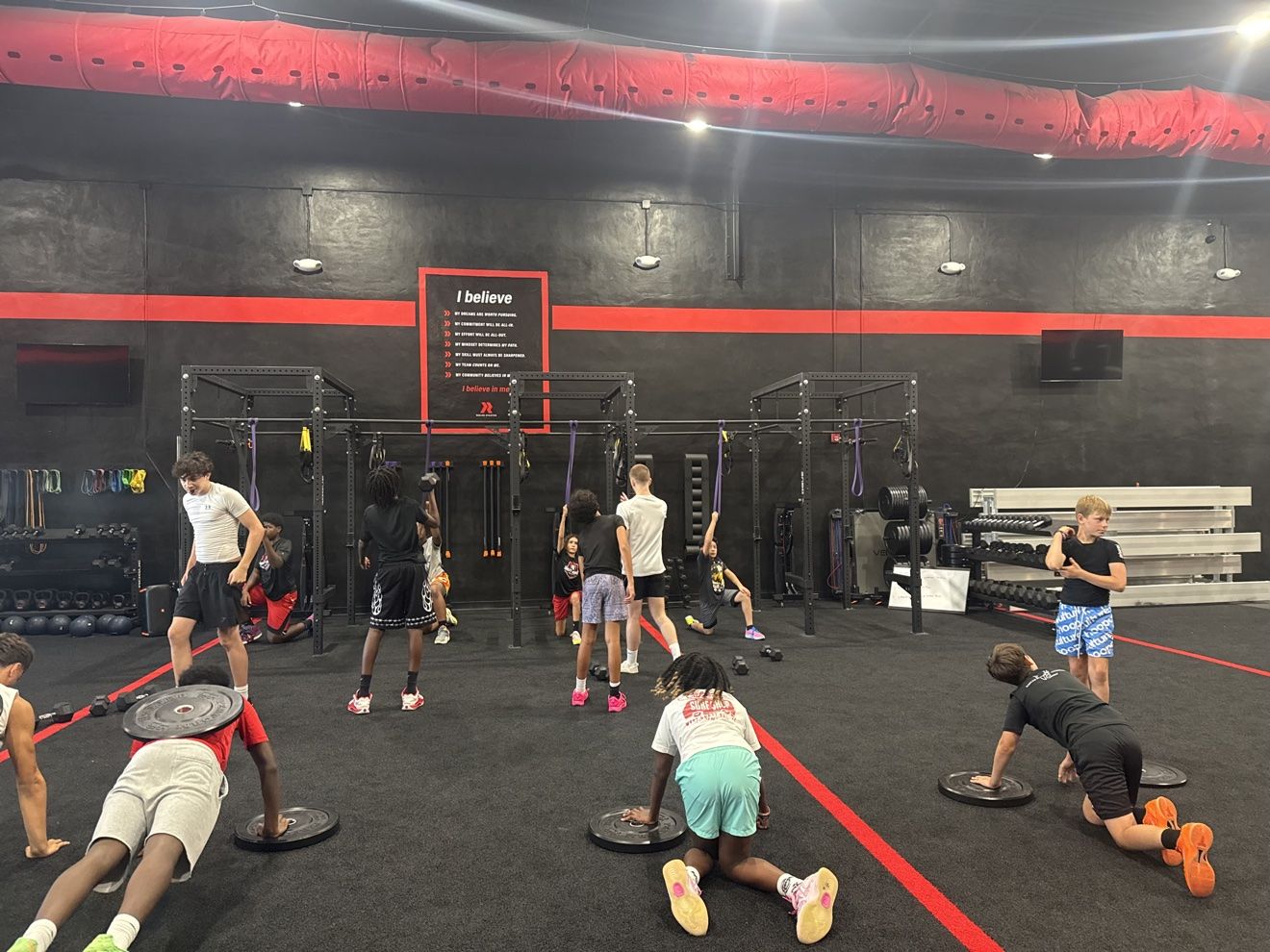
For kids, strength work does not mean heavy barbells. It means bodyweight movements done well: squats, lunges, single leg work, push and pull patterns, core work, progressed gradually and coached closely. A kid who can control his own bodyweight in every direction is a kid whose joints have protection.
How a kid lands matters
Watch how young athletes land from a jump and you will see the risk plainly: knees caving inward, stiff legs, all the force going straight down into the joints. Now watch an athlete who has been taught to land: soft, knees tracking over the toes, hips absorbing the load. Same jump, completely different stress on the body.
Landing and cutting mechanics are teachable, and they are a core part of what we coach. The same applies to stopping. A kid who learns to decelerate under control is protecting himself every single time he slows down in a game, which is hundreds of times a season.
This is what the strength side of a session looks like at Redline:
Rest is part of the program
The other side of prevention is not a drill at all. It is workload. Kids who play one sport year round, on multiple teams, with no real break, break down. Growing bodies need variety and they need rest. Playing different sports through the year is not a distraction from development, it is one of the healthiest things a young athlete can do, and so is a genuine offseason where training continues but the pounding of games stops.
That is why we push families toward offseason speed and strength work instead of another season stacked on top of the last one. Build the body in the quiet months, and it will hold up in the loud ones.
What we do at Redline
In our speed and agility program at Redline Athletics Fort Myers, strength and mechanics are built into every week, not saved for a special injury prevention day. Coaches watch how each kid lands, cuts, and stops, and they correct it in the moment, because that is when correction works. Groups stay small enough that no kid is hiding in the back doing a movement wrong fifty times.
No program can promise your child will never get hurt, and you should walk away from any that does. What a program can do is stack the odds: stronger muscles, cleaner movement, smarter workloads. That is the work, and it starts earlier than most parents think. It is one more reason the right age to start speed and agility training is younger than most families expect.
Free Trial
Build a body that holds up.
The first SAQ session at Redline is free. We watch how your child lands, cuts, and stops, and we show you what we would build first.