
Speed & Agility
Speed training for young basketball players.
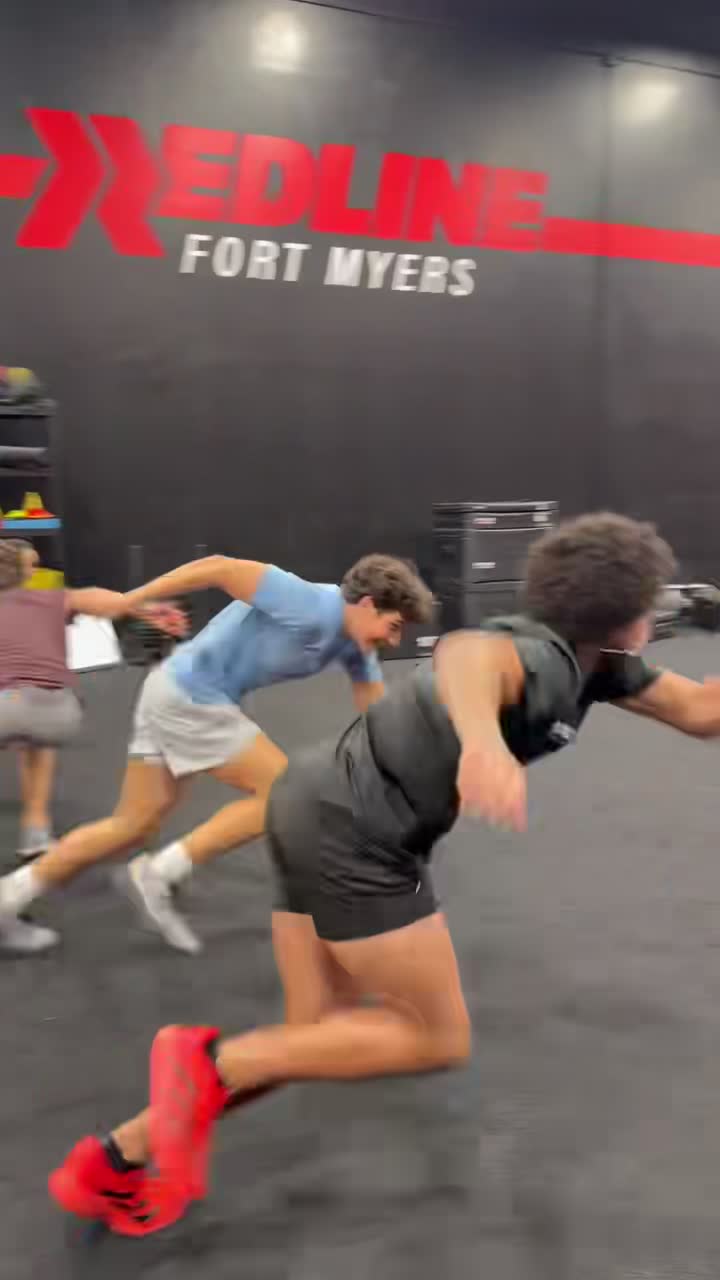
Basketball speed is not track speed. A basketball player almost never runs in a straight line for more than a few steps. He explodes, stops, slides, cuts, jumps, and explodes again, all inside a space the size of a classroom. Training that speed means training the short stuff, because the short stuff is the whole game.
When a young player looks slow on the court, it usually is not his top speed that is the problem. It is his first step, his stop, or his change of direction. The good news is those are the most trainable parts of the game.
The first step wins
Getting past a defender, closing out on a shooter, beating somebody to a loose ball: all of it is decided in the first two steps. A player with a quick first step plays the whole game a half step ahead, and a half step in basketball is the difference between a layup and a blocked shot.
First step speed comes from simple things done well: body lean, driving off the front leg, arms working with the legs instead of against them. It also comes from strength. The harder a kid can push the floor, the faster he leaves. This is why our speed work always includes age appropriate strength, not just sprints.
Stopping is half the game
Coaches notice the players who can stop. A young player who sprints full speed and then needs four extra steps to slow down is out of control, and out of control players foul, travel, and turn the ball over. A player who can go from full speed to a balanced stop in two steps can pull up, pass, shoot, or change direction. Same legs, completely different player.
Deceleration is trained, rep by rep, the same way shooting is trained. And it doubles as protection: kids who learn to stop and land under control put far less stress on their knees and ankles.
Sprint work on the turf at Redline looks like this:
Lateral speed is defense
Every young player wants to score, but the ones who play are the ones who can guard. Defense is lateral speed: sliding without crossing the feet, turning the hips, recovering when beaten. It is also the part of speed that normal practice barely touches, because team practice time goes to plays and scrimmaging.
That gap is exactly what SAQ fills. The movement patterns a defender lives on are the same patterns we train every week in our speed and agility program at Redline, alongside the reactive agility work that carries over to real games, where a kid learns to move when he sees something, not when a drill tells him to.
Built for basketball, grounded in the basics
Underneath the basketball specific work, the foundation is the same for every kid: run well, jump and land well, get stronger, repeat. We wrote the plain version of that in what actually makes a child faster. Basketball speed is that foundation aimed at the court, trained in small groups by coaches who watch every rep and know every kid by name.
Parents see it in games within a couple of months: the closeout that arrives on time, the first step that suddenly beats people, the fast break finished under control instead of out of it. That is speed doing its job.
Free Trial
Give your player a first step.
The first SAQ session at Redline is free. We test how your player starts, stops, and moves laterally, and show you the plan to sharpen all three.