
Shooting
Shooting workouts for kids at home.
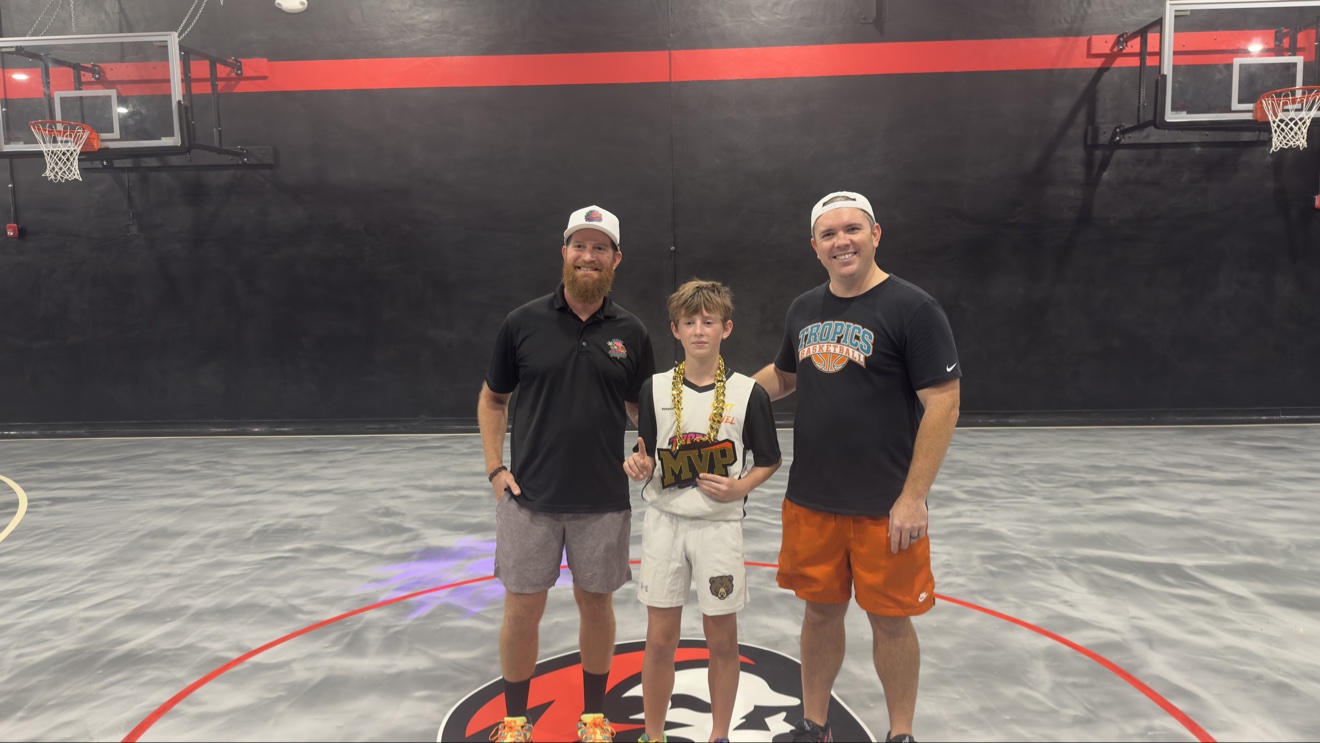
The player in that photo did not earn the chain on game day. He earned it on the days nobody watched, in short sessions where the reps were honest. That is what a home shooting workout really is. Not an hour of chucking shots at a hoop in the driveway. A small, repeatable routine a kid can run by himself, three or four times a week, that quietly turns into makes when the lights are on.
What a home workout actually needs
A ball, a hoop, and a plan. That is the whole list. The plan matters more than the equipment. Kids left alone with a hoop do what kids do: they back up to the street, shoot shots they cannot reach yet, and practice the heave we then have to unteach in the gym. Twenty focused minutes beats an hour of that every single time.
Keep the session short enough that he finishes wanting one more round. A tired, sloppy last fifty shots teach his body the wrong motion. Short and clean is the rule, and it is the same rule behind how often kids should practice basketball each week.
Start close, with form shooting
Every home workout starts a few feet from the rim, one hand under the ball, guide hand off it, shooting for swishes. Five makes from three close spots before he takes a single step back. This feels too easy to older kids, which is exactly why they skip it, and exactly why their shots break down in games.
If his form itself is the problem, distance will not fix it. Back up only when the close shots look the same every time. Before you build a whole routine on a broken shot, read how to fix your child's shooting form and repair the foundation first.
Count makes, not minutes
Give the workout a number. Fifty makes is a session. A hundred is a big day. A kid chasing a number stays locked in long after a kid watching a clock has quit, and he walks inside knowing exactly what he did. Write the number on a piece of paper on the fridge. Watching that count climb week over week is how a young player learns his work is adding up.
Counting is not a gimmick in our gym either. It is the same thinking behind why we track stats for every league player: numbers are not there to chase points, they are there to prove development is working. A driveway count does the same job at home.
A simple routine he can run alone
Here is a week that works. Day one: form shooting close, then spot shooting from five places he actually shoots from in games, fifty makes total. Day two: shots off the dribble, one or two hard dribbles and up, both directions, forty makes. Day three: free throws woven through everything, two after every set, because free throws are the only shot in basketball nobody guards. Then a day off. Repeat.
Notice what is not in there. No marathon. No trick shots. No hour of three pointers launched from the sidewalk. The routine is boring on purpose. Boring done four times a week is how a shot gets built.
The parent's job is smaller than you think
Rebound for him if you are out there. Keep the count. Encourage the work, not the result. What he does not need is a second coach narrating every miss from a lawn chair. Kids stop experimenting, stop enjoying it, and start playing tight when every driveway rep comes with a correction. One voice in the gym is plenty. At home, be the reason he wants to go back out tomorrow.
Where driveway work shows up
This is one of our Ignite MVPs, and the shots you see falling were not invented that night. They were built in short, counted sessions long before the game, then trusted when it mattered:
Home reps build the base. The gym sharpens it. When a kid gets both, counted shots at home and real coaching under one roof, his development stops depending on luck. That is the whole idea behind everything your kid gets here.
Free Trial
Get his home reps checked.
Book a free trial session. A coach will watch his shot, confirm the routine he is running at home is building the right habits, and adjust what is not.